



4 Advent Devotionals for the Whole Family
Advent is more than counting down the days until Christmas—it’s an invitation to slow down, gather together, and prepare our hearts for the coming of Jesus. In the midst of busy schedules, full calendars, and endless to-do lists, families need simple, meaningful ways to pause and refocus on what the advent season is really about.

That’s why we’ve gathered four free, family-friendly Advent devotionals—each centered on a timeless truth of the Christmas story: Hope, Peace, Joy, and Love. Written by members of the WinShape Camps family, these devotionals are designed to help parents and kids engage Scripture together, ask thoughtful questions, and live out their faith through hands-on activities at home. Whether you choose to walk through one devotional a week or revisit them throughout the Advent season, our prayer is that these resources help your family experience Advent not just as a season you rush through, but one that deeply shapes your hearts.
Advent Devotional: A Season of Hope
Advent Devotional: A Season of Peace

Written by: Mayra Leyva
Advent Devotional: A Season of Hope
Our Deeply Rooted Advent Hope
“I hope the weather is good today.”
“I hope to take a vacation soon.”
“I hope I like my Christmas gifts.”
Do these thoughts sound familiar? Maybe even too familiar?
Sometimes we pray fervently for the Lord to answer our prayers, only to feel like He is not listening or has forgotten us. Sometimes we work and serve tirelessly, only to find we did not receive a promotion or credit. Sometimes we find ourselves wishing so many things, only to find that they left us feeling hurt or disappointed.
So, where is God in the midst of our hopelessness?
David’s Story of Hope
Let’s read about David, who learned what it looked like to cling to the promises of God and praise Him during seasons of hopelessness. 📖
Read Psalms 59:16-17 (NIV): “But I will sing of your strength, in the morning I will sing of your love; for you are my fortress, my refuge in times of trouble. You are my strength, I sing praise to you; you, God, are my fortress, my God on whom I can rely.”
Let’s do a quick dive into what was going on in the life of David.
– King Saul was the first king over Israel, but he chose to do his own will rather than follow God’s command and guidance. This did not please God, so God chose David to be the next king over Israel. Between the time that David was anointed king and was crowned king, he waited for almost 22 years. Things for David were not simple or easy in his season of waiting. (1 Samuel 16-27)
– Soon after being anointed as king, Israel went into battle with the Philistines and they came against a gladiator. With faith in God and a slingshot, David proved victorious over Goliath, and got lots of attention from the people. This caused Saul’s jealousy to grow, and he made a plan to pursue and kill David. (1 Samuel 17)
– For more than a decade, David spent his life fleeing from Saul. This is the context from which David writes most of the Psalms, including Psalm 59. Now understanding the context of Psalm 59, we can all agree that is it a beautiful proclamation from David that God is his refuge and strength!
Think about David’s circumstances: he is anointed king, waits for over 2 decades to be crowned king, is relentlessly pursued by his enemy, and yet, David still faithfully follows the Lord’s commands. It would have been easy for David to lose faith, yet he modeled for us what it looks like to have hope in God regardless of his circumstances. David wasn’t perfect by any means, but he was a humble leader who the Lord used powerfully. Even faithful and obedient people can have moments in their life when things feel hopeless – this is a battle we have to fight, confidently believing that God is for us, not against us and will keep His promises.
Time and time again in the Old Testament, God promised that a Messiah would come from David’s lineage, the royal line. (2 Samuel 7:12-16) Spoiler alert, the Promised King came! Jesus being fully man and fully God came to earth, lived a perfect life, died on the cross for our sins and then rose victoriously three days later so that we could have a relationship with God!
Our Great Hope
In this advent season, we hold these two realities: we get to look back in remembrance of the first arrival of our King Jesus, but we also look forward with great anticipation at the second arrival of our King Jesus. Jesus and His Kingdom will reign for eternity – this is our great hope!!
Let’s ask this question again, where is God in the midst of our hopelessness?
God is still moving and working profoundly among His Church. God is always active and always present, even when we cannot see Him or possibly understand. In this season, may our hope in God be deeply rooted in our hearts. May we not lose hope in God, but instead, cling to Him and His promises for us!
Questions for Reflection:
- When you are in seasons of discouragement, fear and hurt, what is your natural response? Do you walk away from seeking the Lord or do you seek the Lord?
- List (at least) three of God’s promises to his people. What are practical ways to remember God’s promises for you today?
- What does it look like to have God as king over your life? How has He protected and provided for you?
- What is one thing you are fervently praying for this season? What is the posture of your heart in this prayer?
Advent at Home Activity: Hope
Blindfolded Steppingstones
Use this activity to help kids understand the meaning of hope, and how they can trust God to guide them, even when their situations feel hopeless.
- Create a “stepping stone” path using pieces of cardboard, paper, or whatever you can find. Create a path from one side of a room to the other. Include small challenges along the way… Maybe a chair to climb over, or “balance beams” made of masking tape.
- Talk about the obstacles we face in life: As your kids journey through the path, talk about obstacles that we face in life: making new friends, getting sick, losing a family member.
- Now, place a blindfold over your kids eyes. Here you can explain that often we can’t see our way through the obstacles in our lives alone. We can “hope” to find our way through, but our chances are slim on our own.
- Finally, take your kid’s hand and guide him along the path. Explain that we can have hope through the challenges of life because we know that God is with us. Even if we sometimes may feel like we’re in the dark, our hope comes from knowing that God directs our steps.

Written by: Jimmy Simpson
Advent Devotional: A Season of Peace
Peace. When you hear this word many ideas, concepts, and visuals probably flood your mind. You might think of the peace meaning a lack of conflict or fighting. Or peace could stir up the concept of inner tranquility and a sense of calm. But what is peace? More importantly, what does Scripture say peace is? And how can we find it this Advent season of peace?
What the Bible says about Peace
The Bible has two words for peace. In the Old Testament, the Hebrew word for peace is shalom and the Greek word for peace in the New Testament is eiréné (i-ray’-nay). Shalom means completeness. Its root word, shalam, means to make amends, make whole or complete. Shalom refers to something that is complex with many pieces, but that is in a state of completeness. Eiréné means one-ness, quietness, or rest. It is derived from the Greek word, eirō, “carrying the concept of wholeness, unity, or to tie together.”
If we look at Exodus 22:4 we see that if someone steals livestock from a neighbor, they must restore, or shalam, what they took under the law. There’s a requirement to make complete that which is lacking. Therefore, having shalom means being in a state of wholeness. Jumping to the New Testament, Jesus’ birth was announced as the arrival of eiréné, or peace. Jesus came to offer his Peace to others, which is exactly what He said in John 14:27, “my peace I give to you all….” And Paul declares that Jesus is our peace in Ephesians 2:14-15.
True peace is not just the lack of conflict. True peace takes that which is broken and restores it to wholeness. Whether that be in our lives, the relationships we have, or in the world we live in. When Jesus came to earth in human form, lived a sinless life, died on the cross for our sins, rose from the grave to defeat death, and then ascended to heaven, He established a wholeness that cannot be overcome. If acquiring true peace sounds like a lot of work, that’s because it is – but the good news is that Jesus did all that work for us, and for you!
Finding Advent Peace
It is the season of peace. As we look at the big picture in this Advent season, we can have peace because of who Jesus is. His followers declared that He created peace between mankind and God when Jesus gave His life on the cross for our sins (Romans 5:1). Jesus restored to wholeness our broken relationship with God because He was the complete and whole person that we were made to be but have failed to be.
As Christians, we are to help make peace in a world that often finds itself in conflict. This is only accomplished when we live lives of humility, patience, and bear with one another in love. No matter where you are in life, what trials you might be facing in this season, you can find peace in the one who will take a broken world and one day restore it into complete wholeness. So, in this season of peace, let us celebrate the one who’s name is Peace.
Questions for Reflection:
- Where have you been sensing a lack of peace in your own life recently?
- How much of your own sense of peace is related to circumstances, relationships, or an “inner calm” instead of on Jesus and your relationship with him?
- How can thinking about what the Bible says about God, His kingdom, the gospel, etc. bring peace into our hearts?
- How could walking in the peace of God reflect His kingdom to the world around us?
Advent at Home Activity: Season of Peace
What Makes You Feel Peace
To help your family understand what “peace” is, try this easy tactile learning activity.
- Ask your kids what makes them feel peaceful (hugs, a warm blanket, sitting by the fire, hot chocolate, etc.)
- Then, do those things with them! Whatever they suggest. In the hustle and bustle, we may find it difficult to sit still; but isn’t THAT just what we need a reminder of?!
- Lastly, ask them to imagine an even greater peace than that – something that makes them feel even better! Explain to them how Jesus IS our peace. Sometimes these other things just can’t calm us down, but Jesus can.
Hopefully this activity will help them understand that the peace Jesus offers is for their own hearts specifically!
https://www.wordsoffaithhopelove.com/what-is-peace-in-the-bible/
https://www.youtube.com/watch?v=oLYORLZOaZE


Written by: Bryant Malone, Senior Manager of WinShape Camps Outreach and Communications
Advent Devotional: A Season of Joy
Joy to the World
Do you ever feel like Christmas has lost a little bit of the magic, or the joy, it once had? When you’re a kid and you’re experiencing your first few Christmases on planet earth, everything about it creates a sense of wonder and awe. However as time moves on, life gets busier, bills get bigger, and what you remember as the magic of the season seems to be less joyful than it once was.
While this is an unwelcome feeling, it’s not an uncommon one. It’s easy to get lost in all the stuff of the season and miss out on the parts that used to feel so good. It doesn’t just happen around the Advent season either.
In Psalm 51:12, David writes: “Restore to me the joy of my salvation.”
David finds himself at a low point in his life. His circumstances have caused him to lose sight of the joy (or magic, if you will) of all that God has done for him. He’s traded the goodness that God offers to those who love Him for the passions and pleasures that the world offers. Realizing that those things left him feeling empty, David asks God to remind him of the joy, satisfaction, and pleasure he found in the Lord before he chased the things of the world.
Life is filled with challenging seasons. Jesus even guarantees us that we will have troubles. It’s easy to find yourself down in these hard seasons. David reminds us that even in dark circumstances, we have a sense of hope. And that hope is a cause for joy.
A Cause for Joy
As we enter into Christmas and advent season, let’s keep in mind the real reason we can have joy. Joy is not found in pretty lights, matching wrapping paper, or even sweet treats (although they do you make you feel pretty good). Joy is found in the hope we were given at Christmas when God sent us his long-awaited Son, Jesus. Joy is found in remembering that Son would live a perfect life and go to the cross on our behalf. Joy is found when we recognize God is with us and we can walk with him, even when things seem hard.
How will you look past all of the stress of the season, slow down, and find joy as a family this Advent?
Questions for Reflection:
- What are you looking towards for happiness? And how do you seek out happiness around the Christmas season?
- How would you describe the difference between happiness and joy?
- Have you ever experienced joy, alongside sadness, grief or challenges?
- How does the hope of Jesus make it easier to be full of joy, even when life gets hard?
Advent at Home Activity: Joy
Joyful Advent Stockings
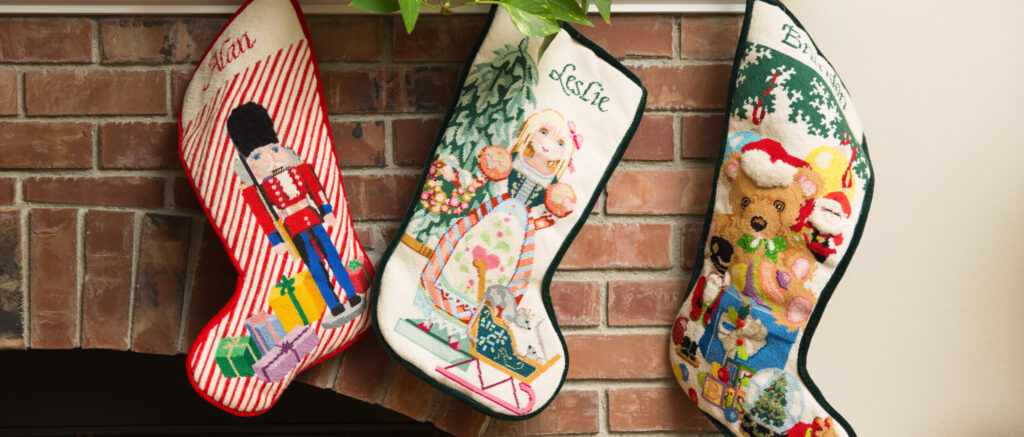
This is something that is fit for the WHOLE family, and uses supplies you probably already have… Christmas stockings!
- Start by reading from Psalm 100, which begins with “Shout for joy to the Lord, all the earth!”.
- As you read the verse… talk about things that you all are thankful for, make you joyful, that God has given to you.
- Write them down (or draw them) and drop them into your stocking.
- Throughout Advent, as think of other things, continue to write them down and place them in you stocking.
- Pull out all of the papers on Christmas Eve or Christmas morning, and talk about all of the JOYFUL things we can praise God for!
Further Reading:

Written by: Emily Alters
Advent Devotional: A Season of Love
The verb love has taken on a dull uniformity in our world today. We “love” everything from newborn babies to the new coffee shop down the street. Though our love for these things is different, the English language doesn’t do a great job of distinguishing between our love of ice cream and the love you have for your best friend. However, the Greek language used in the Bible does.
Agape / Love
The New Testament distinguishes four different kinds of love, using a specific word for each.
- Eros is the word used to describe romantic love.
- Philia is a friendship love, in which people are “drawn together” over common interests.
- Storge is a familial love – often used to describe a parent’s love for a child.
- Agape is the word used to describe the love of God.
Agape love, in the Bible, comes from God. His love isn’t a naive, dewy-eyed love; His love is part of his character. God loves because it’s who he is. Agape is given with no expectation that it be given back. This is the way that God loves us. Agape is also the word that Paul uses to describe why God sent his Son, “But God shows his agape love for us in that while we were still sinners, Christ died for us.” (Romans 5:8)
The season of Advent is a season of understanding God’s love for us. It’s a season of remembering a great act of love – God becoming human.
Love with Us
Generation after generation, God remained faithful to his people even when they doubted him, questioned him, and turned away from him. God STILL kept his promise that he had made to David long ago. (2 Samuel 7:16) Jesus, who was fully God and fully human, (Philippians. 2:7) was born in a humble manger, lived his life on earth amongst average people like you and me, and eventually sacrificed himself on the cross so that we could live forever in complete unity with Him.

Our Call to Advent Love
Today, we look back and remember that first advent. Agape is not just the love that God has for us, but it’s the way that he has called us to love him in return, and to love one another.
“God’s own love was revealed when he sent his one and only Son into the world so that through Him, we could have life.” – 1 John 4:9
“Beloved ones, if that’s how God has loved us then we ought to show love to one another.” – 1 John 4:11
Human love, even in its finest moments, can only whisper of the pure and holy love of God. So how could we possibly love in this way? First, look to the Christmas story. It’s all about love. It’s a love that says, “I am willing to love you no matter what.” When we begin to see ourselves as unworthy recipients of the agape of God, we naturally begin to love others (including our enemies) with this “no matter what” kind of love.
We love because He first loved us. (1 John 4:19) Yes, it will cost us something. It probably won’t cost us our life; but it may cost us our pride, our comfort, our preferences, our popularity… But lay these worries aside and look to Jesus. Reflect on the love of Christmas. Receive it, and pass it along.
Questions for Reflection:
- Think about the most loving person you have ever known. How did he or she show love?
- How does what you’ve learned about God’s agape love, change your perspective on the Christmas story?
- Who is a person or group of people that is most difficult for you to love? What would it cost you to love them with Agape love?
- Read 1 John 4:7-21. According to this scripture, how can we learn to love those that are difficult to love?
Advent at Home Activity: Love
Love Your Neighbor
Jesus may not have meant it quite so literally – to love your neighbor as yourself, (Mark 12:30-31) but this could be a wonderful way for your kids to act out love this Christmas!
Explain to them the love that Jesus has for them, and that all he asks in return is that we love Him and love others with that same love. Then dream up something you could do for a neighbor (or neighbors) on Christmas Eve.
- First, decide on a neighbor that you want to love on.
- Brainstorm what you are going to do for them. Maybe it’s as simple as a basket of cookies and a note on their doorstep (*in this case, encourage the little ones to knock on the door, while you stand back, and hand deliver your gift in-person!) Or maybe it’s an elder man or woman, and you could bring them their mail and give them a cheery, “Merry Christmas!”
It’s simple, but the joy that it will bring to both your neighbors, your kids, and even you as you sit back and watch their little hearts grow will be a WIN, WIN, WIN!
Further Reading:
1 John 4:11-16
1 Corinthians 13:1-8
Matthew 5:44
Matthew 22:35-40
John 15:13
John 21:15-17
Galatians 5:22
https://www.youtube.com/watch?v=slyevQ1LW7A
Wilkin, Jen. “God Most Loving.” In His Image: 10 Ways God Calls Us to Reflect His Character. Crossway, 2018, pp. 45-55.